
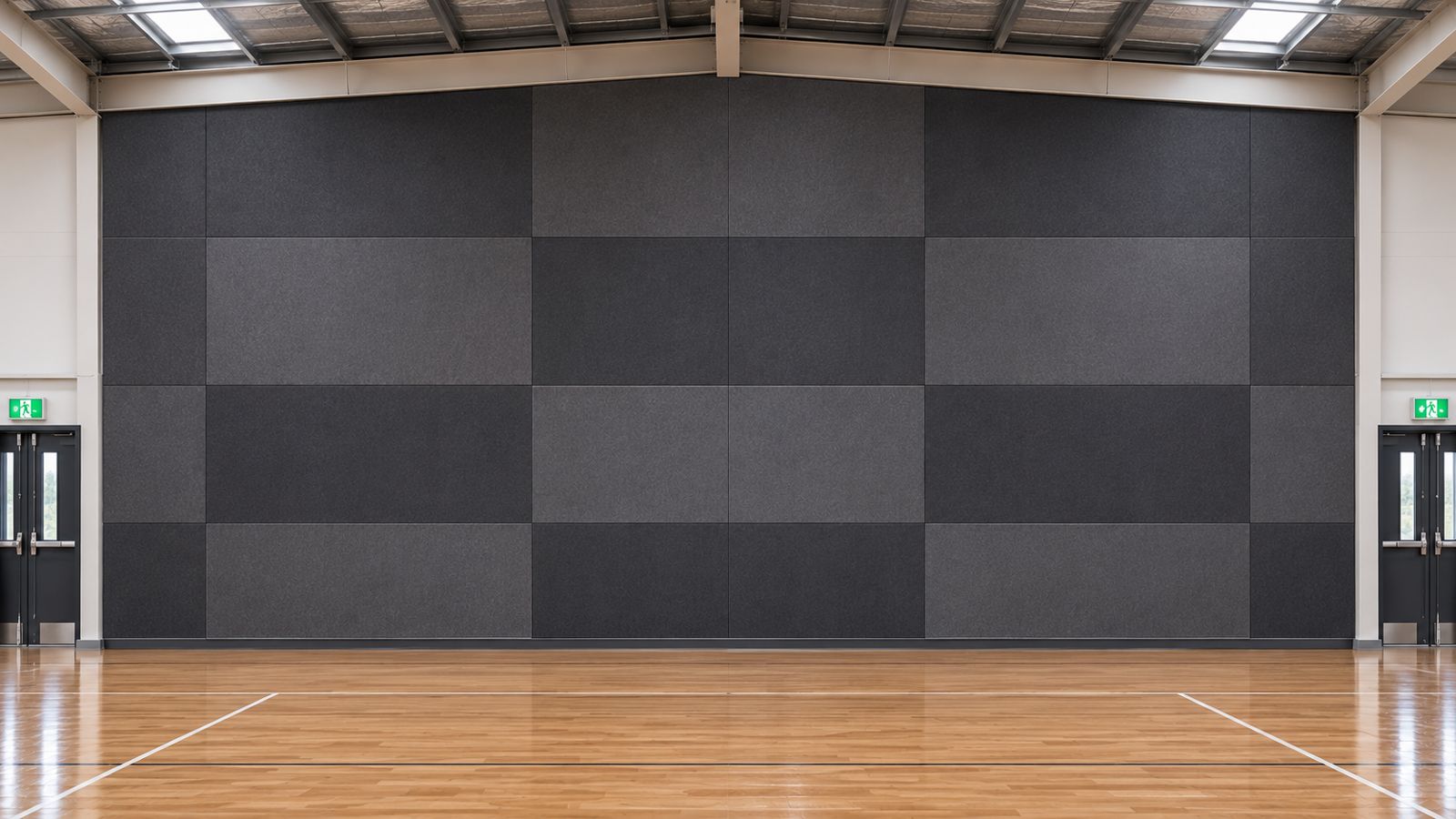
Acoustic Treatment
Big, hard-surfaced rooms can make even a good sound system hard to hear. We treat the room so speech and music come through clearly, and the whole space feels calmer.
Why halls are so hard to hear inHard surfaces, lots of reverb
Walk into almost any school hall, gym or multi-purpose hall and look around. Concrete or timber floors, masonry or plasterboard walls, big windows and a high steel roof. Every one of those surfaces is hard, and hard surfaces reflect sound rather than absorb it.
When someone speaks into a microphone, the sound doesn’t just travel to the audience. It bounces off the walls, floor and roof, again and again, and those reflections keep arriving at your ears for a second or two after the words were spoken. That lingering sound is called reverberation, or reverb. In a big, hard room, each new word lands on top of the echo of the last one, and speech turns into a muddy, booming wash.
Turning the volume up doesn’t help. It just makes the echo louder too. The room itself is the problem, and treating the room is the fix.
What acoustic treatment changesHow it improves the feel of the hall
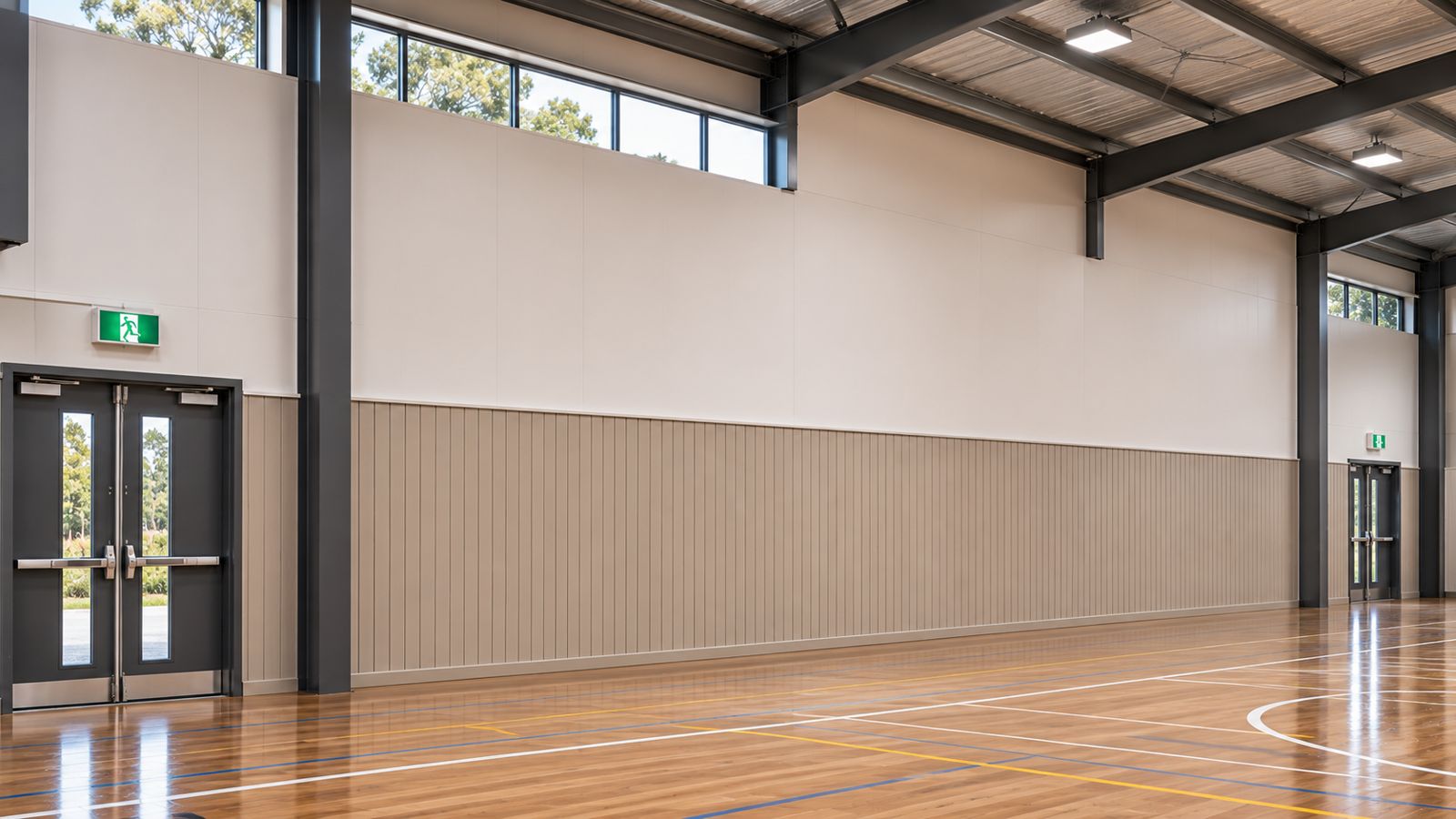
Acoustic treatment adds soft, sound-absorbing surfaces, such as fabric-wrapped wall panels and ceiling treatment, in the right places and in the right amounts. Instead of bouncing around the room, a large part of the sound is soaked up, so the echo dies away much faster.
The difference is easy to hear, and just as easy to feel:
- Speech becomes clear. The principal, the MC and the guest speaker are understood from the front row to the back, often without touching the volume.
- The room feels calmer. A hall full of students, a lunch crowd or a sports carnival no longer builds into a roar. People stop raising their voices to be heard, which keeps the overall noise down.
- Less fatigue. Teachers and coaches don’t have to shout to be heard, and students can concentrate for longer without the constant wash of noise.
- Music sounds better. Choirs, bands and drama productions sound tighter and more defined, rather than boomy.
- Your sound system performs properly. With less echo to fight, the speakers deliver what they were designed to, and microphones are less prone to feedback.
Many people tell us the treated room simply feels different when they walk in. It’s more comfortable, more welcoming and much easier to be in.
Before and after
The same hall, before and after acoustic wall treatment. The hard upper walls are replaced with fabric-finished acoustic panels that absorb sound instead of reflecting it.
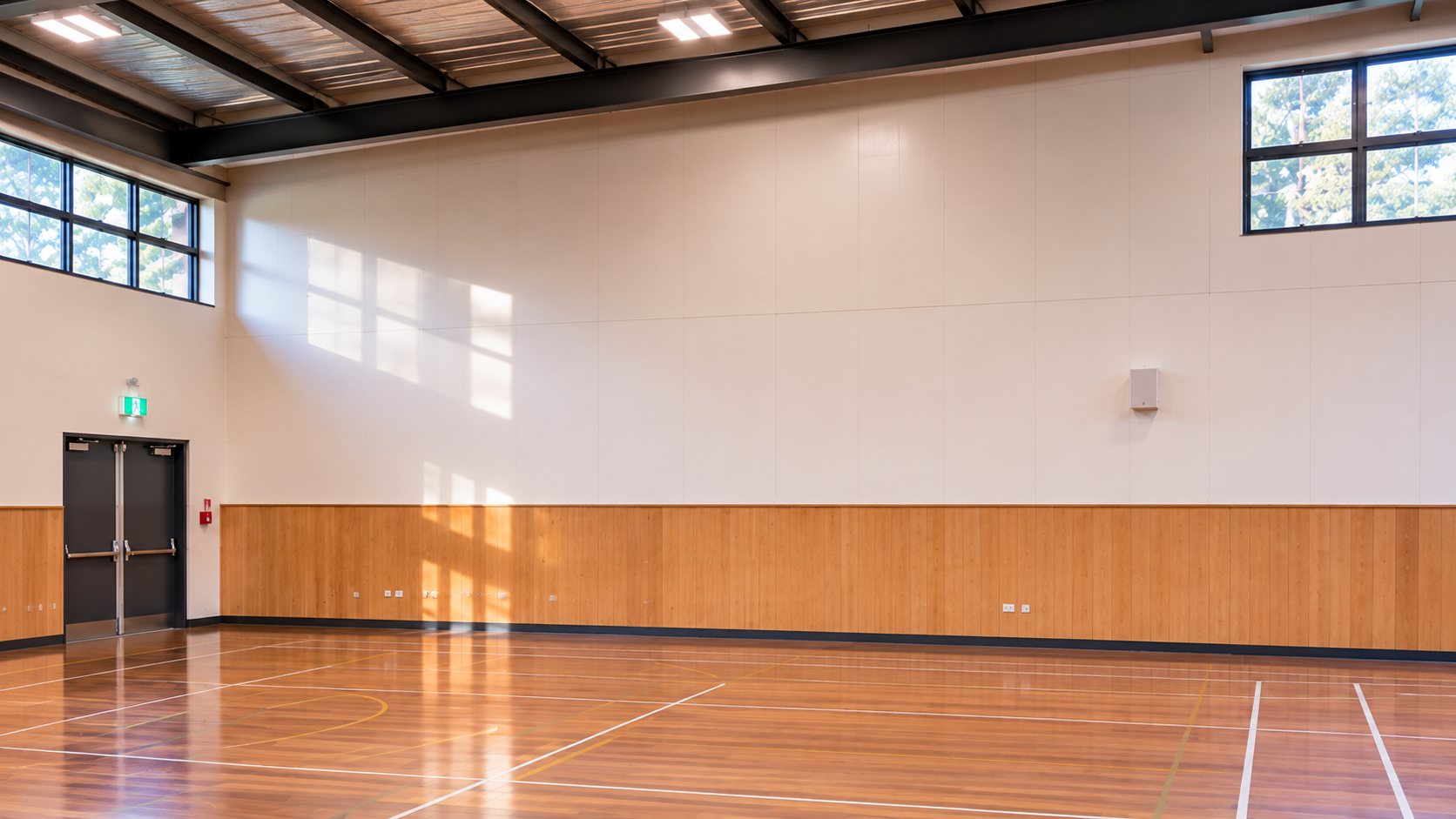 Before
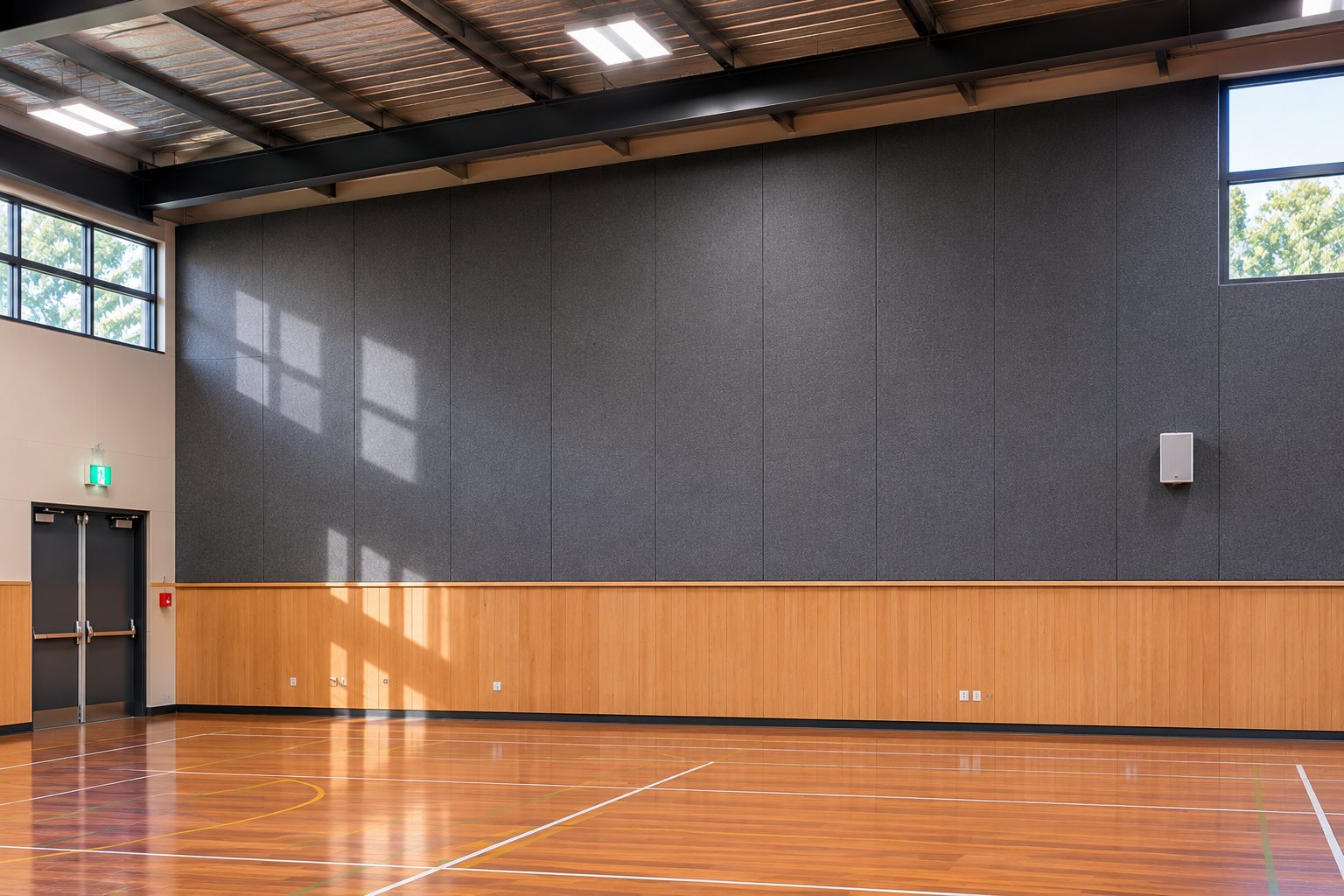 After
How we approach itListen. Engineer. Deliver.
Acoustic treatment is planned alongside your sound system, so the two work together rather than against each other. The reverberation times recommended for each type of room in AS/NZS 2107 give us a reference point.
- Listen. We assess the room during the site inspection, listen to how it sounds and talk about how it’s used and where the problems are.
- Engineer. We recommend the right type, amount and placement of treatment, such as wall panels, ceiling treatment or baffles, to bring the echo under control without making the room sound dead.
- Deliver. Our team installs the treatment as part of the project, then tunes the sound system to the finished room.
Treatment comes in a range of colours, fabrics and finishes, so it can blend into the room or become a feature. Panels can be placed above the impact zone in sports halls and finished to stand up to everyday school life. We’ll show you options before anything is installed.
Where it makes the biggest difference
School halls, gyms and multi-purpose halls
The hardest-working rooms in a school, and usually the hardest to hear in. Treatment makes assemblies easier to follow, takes the edge off lunch and sport noise, and lets one room switch between uses without sounding like a cave. See our multi-purpose hall fitout page.
Drama and performance spaces
Actors’ voices carry without straining, music sounds defined rather than boomy, and the audience hears every line. Treatment is balanced so the room still feels lively for performance.
Houses of worship
Every word of the message matters. Treatment keeps speech clear while letting congregational singing still fill the room, and it gives your stream a cleaner sound too. See our church sound systems page.
Auditoriums, boardrooms and meeting rooms
Clearer lectures, presentations and panel discussions, and much better video calls, because microphones pick up voices instead of the room’s echo. See our auditorium and boardroom AV page.
If your room sounds like a cave, book a site inspection and we’ll take a listen.
Frequently asked questions
Do I need acoustic treatment if I’m upgrading my sound system?
Not always. We’ll listen to the room during the site inspection and tell you honestly whether treatment would make a real difference. In big, hard halls it often makes the biggest single improvement.
Can’t we just turn the sound system up?
Turning it up makes the echo louder too, so speech doesn’t get any clearer. Reducing the echo is what makes the words easier to follow.
Will it make the room sound dead?
No. We plan the right amount of treatment for how the room is used, so speech is clear while music and performances still feel lively.
Will it change how the room looks?
Treatment comes in a range of colours, fabrics and finishes. It can blend into the room or become a feature, and we’ll show you options before anything is installed.
Will panels survive a sports hall?
Yes. Panels can be placed above the impact zone and finished to handle everyday school life.
Can treatment be added to an existing hall?
Yes. Most treatment is fixed to existing walls and ceilings, and installs can be scheduled around your terms and events.
Talk to Team LED
One team handles the whole job, from design to commissioning. Tell us about your venue and we’ll take it from there.